St Agnes', Kiwitea
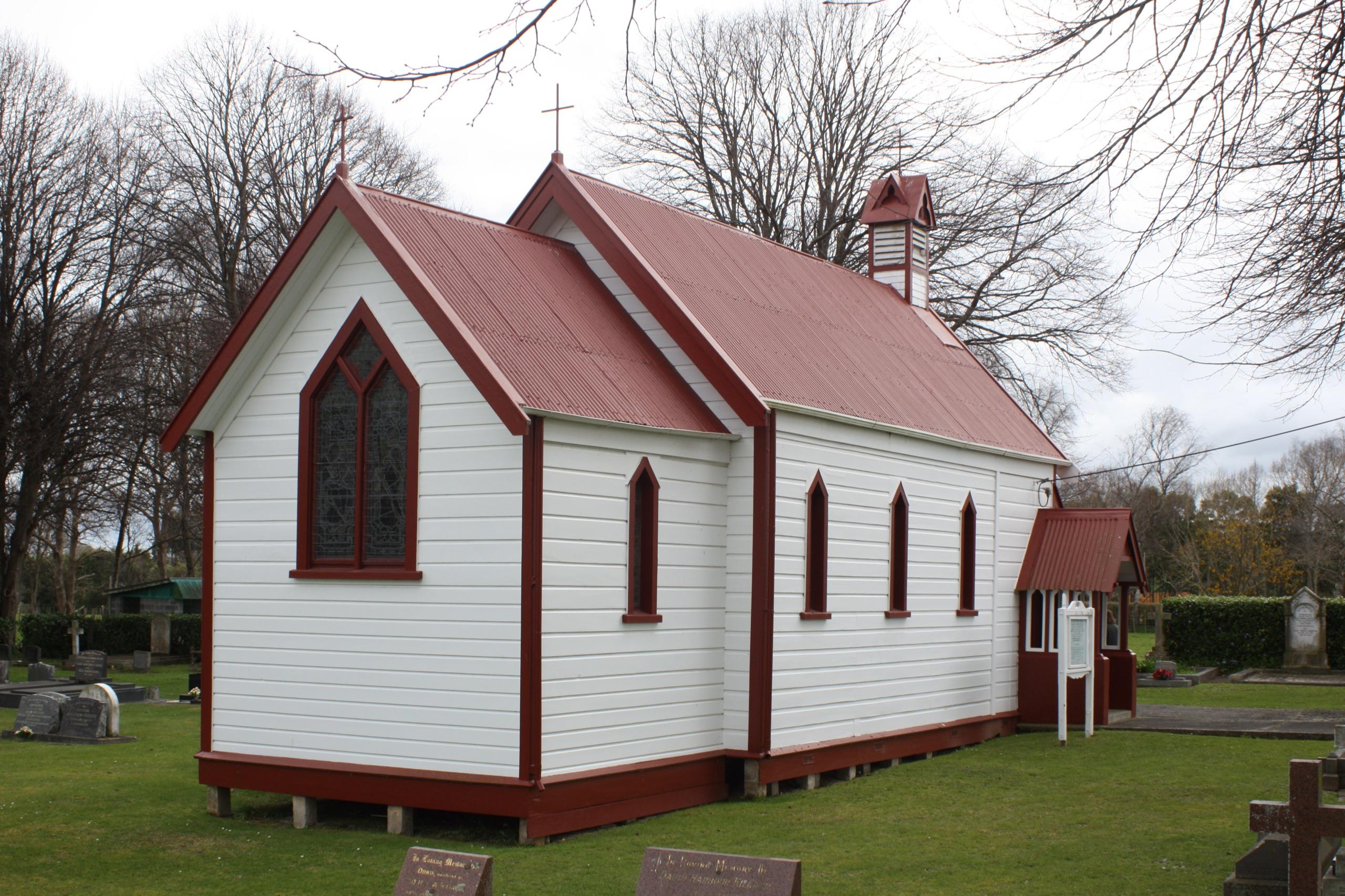 St Agnes' · Kiwitea · 2025
In November 1889, a correspondent writing under the dateline "Birmingham Notes" — a road-settlement north of Kiwitea — sent a letter to the Feilding Star. They had heard that the local Church of England people were planning to build.
I think that in a scattered country district, building a church for one sect is a mistake. The hall certainly is not very suitable for church services, it is very small. However, it is easier to put up a building than to keep a church filled or maintain it.
They built it anyway.
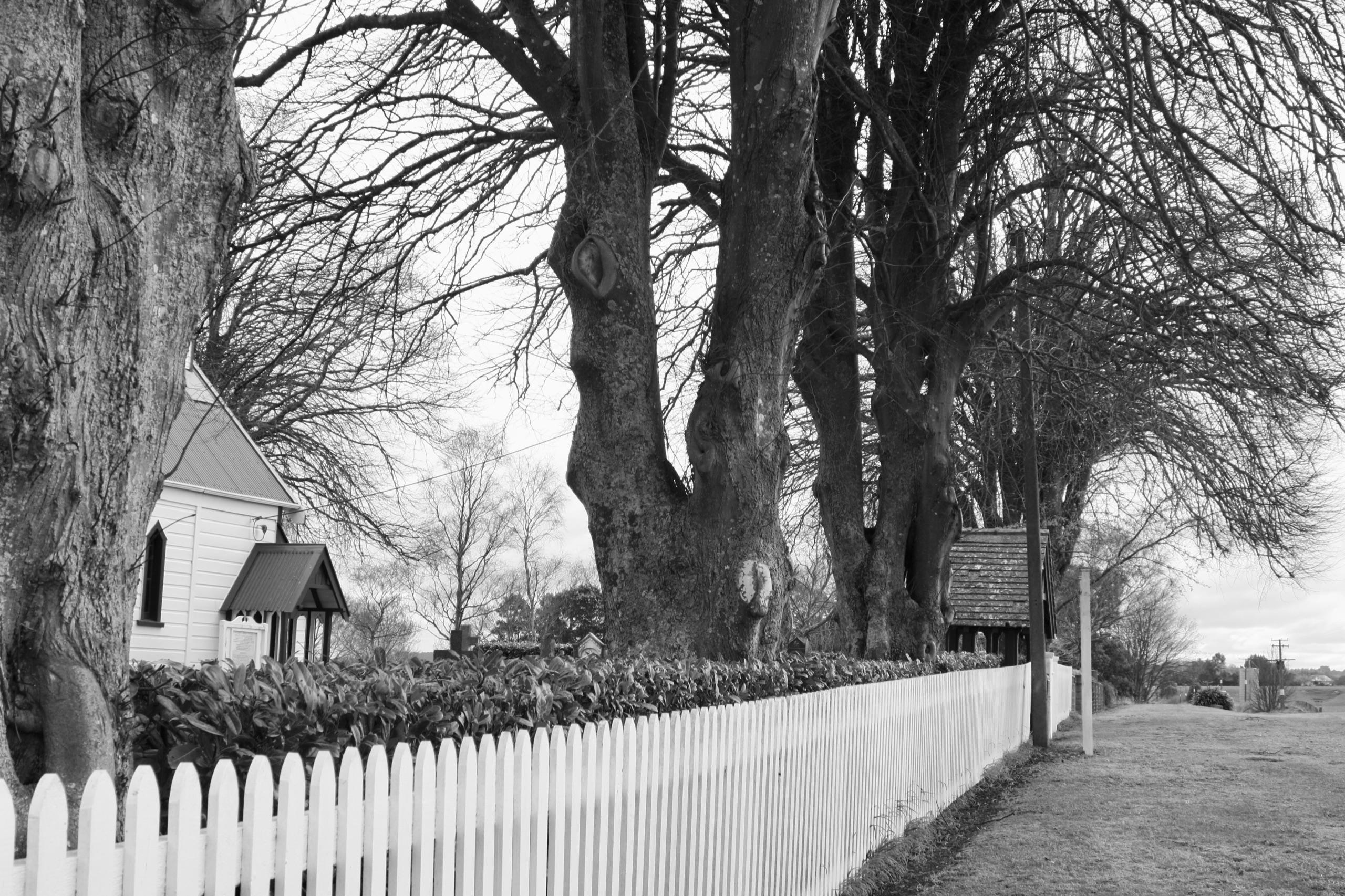
The founding meeting was on 9 October 1889, at the Kiwitea Hall. Ten men. The diocesan architect, F. de Jersey Clere, had written offering a free plan — his way of seeding a church in a new district. The offer was accepted. Individual subscriptions were taken: Banks £10, Levett £10, Church £10, Jacob £10, Corry £7, Line £2, Johnston £1. Total: £82 18s in cash, plus 1,100 feet of timber. C.A.J. Levett offered an acre of his 'Ratanui' farm for the site. That same acre still carries the building.
The Birmingham correspondent had a point. By the late 1930s the congregation was thinning, the vicar was "appealing for improved attendance at church services" at the annual meeting, and the circuit was straining to cover five settlements. But in 1889 there was something newly possible, and ten men put their names to it — and 400 men were simultaneously working on road-making and bush felling north of Kiwitea, the district in rapid transformation at the founding moment. What gets built in that moment tends to last.
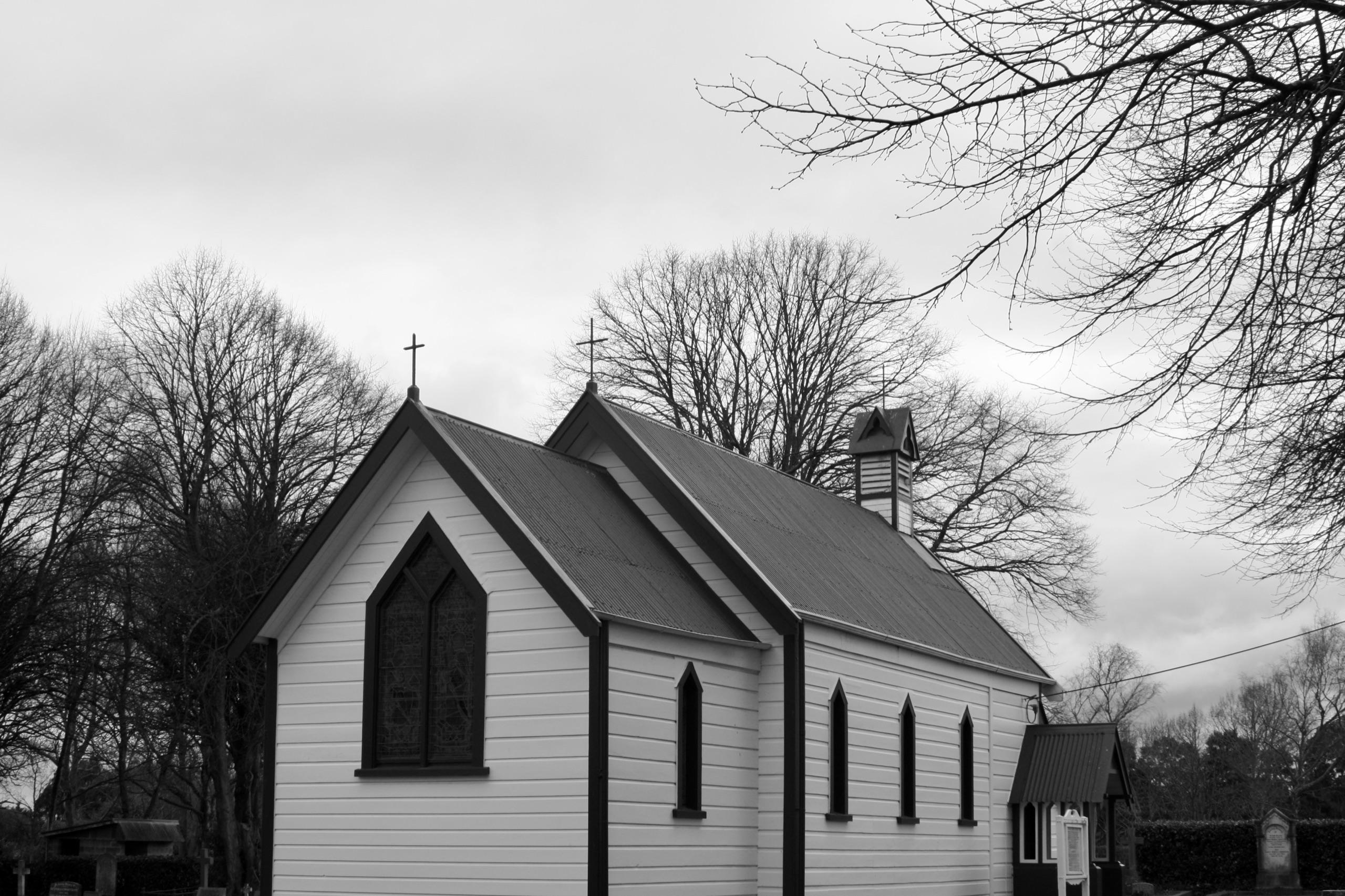
Tenders closed December 1889. W. Batchelar of Wanganui won the labour contract at £64 4s. Timber from Messrs Corpe & Co., £39 9s. Site clearing began January 1890. Six months' work, and by late July the building was ready.
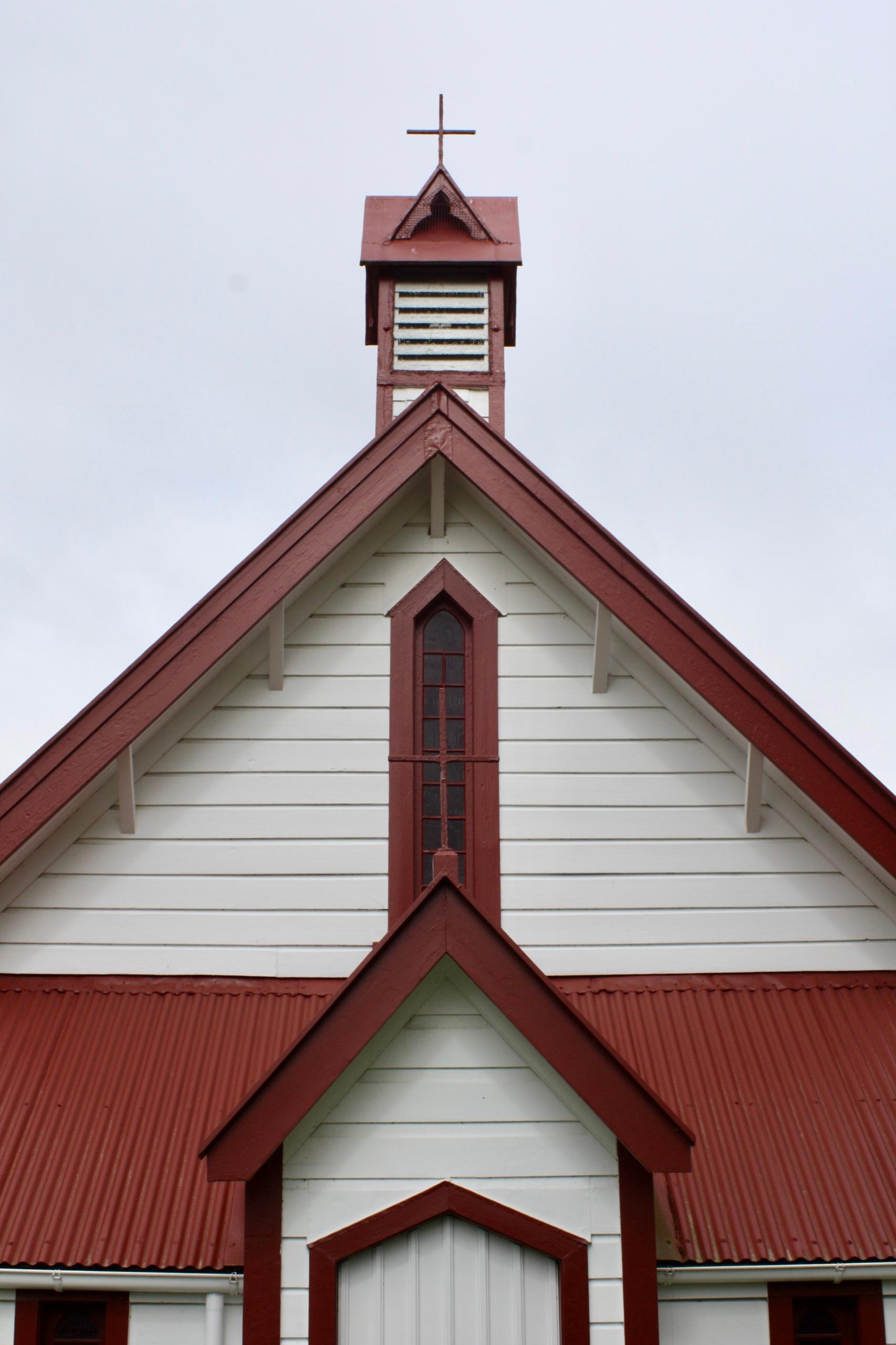
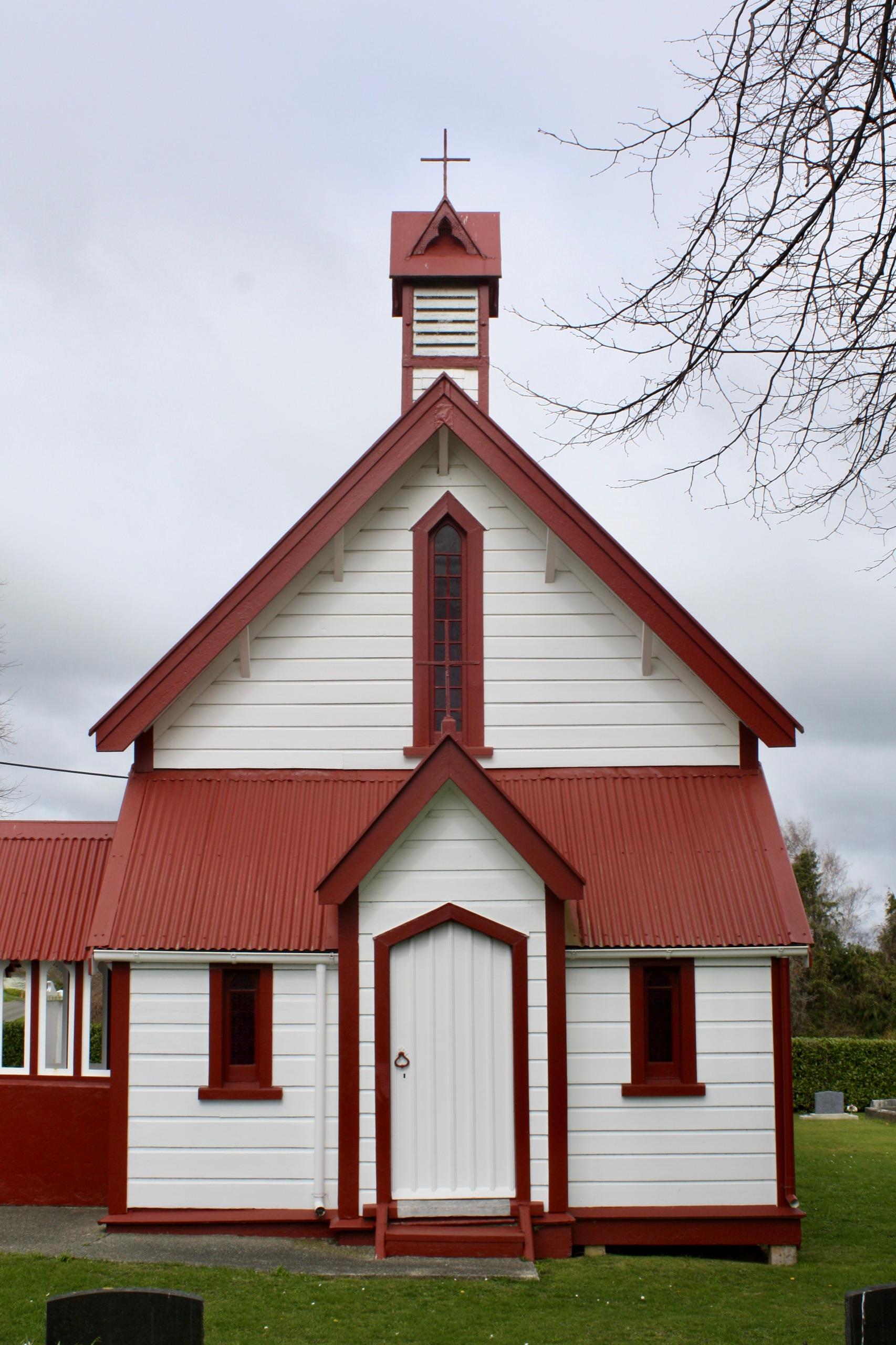
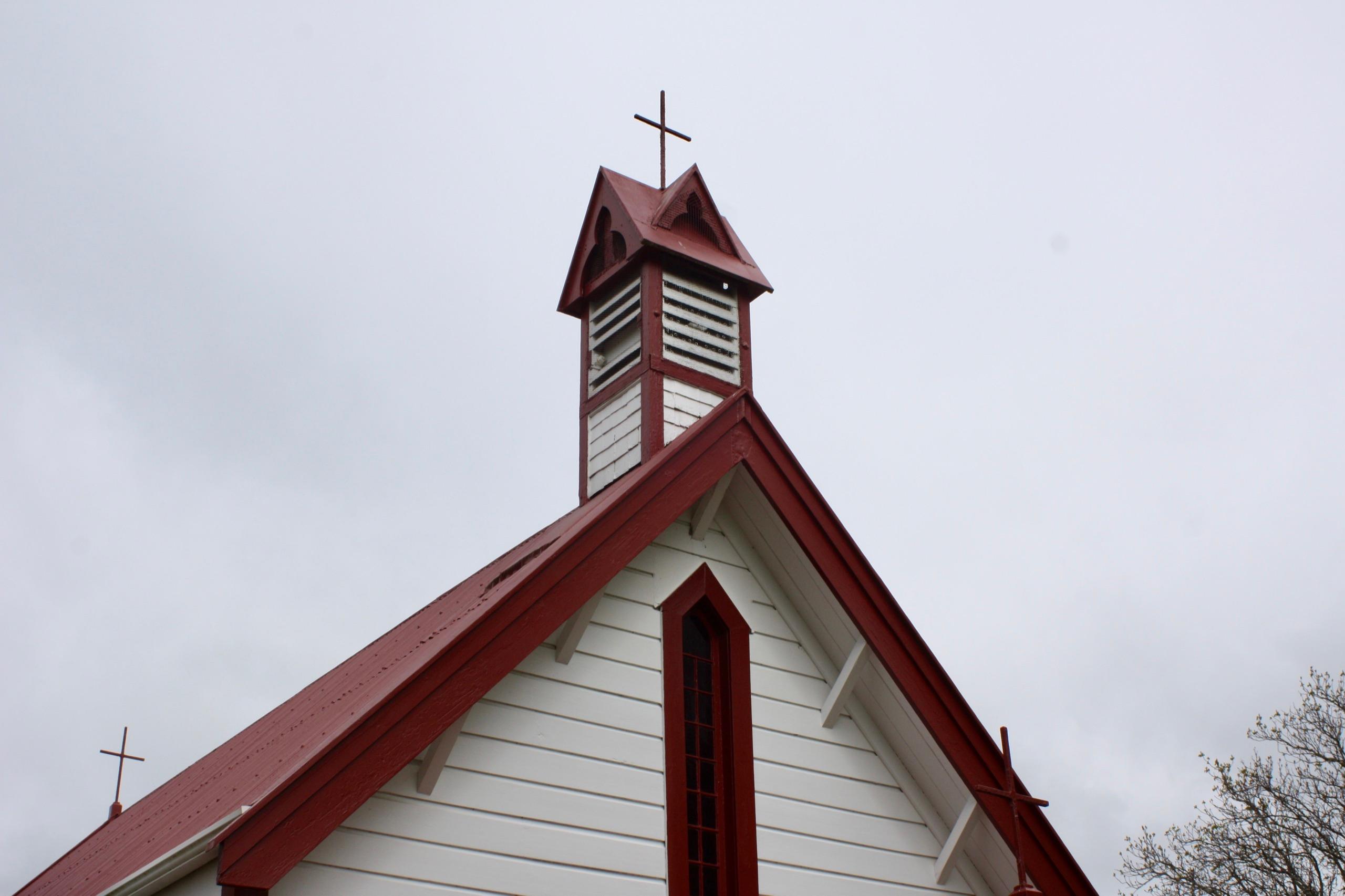
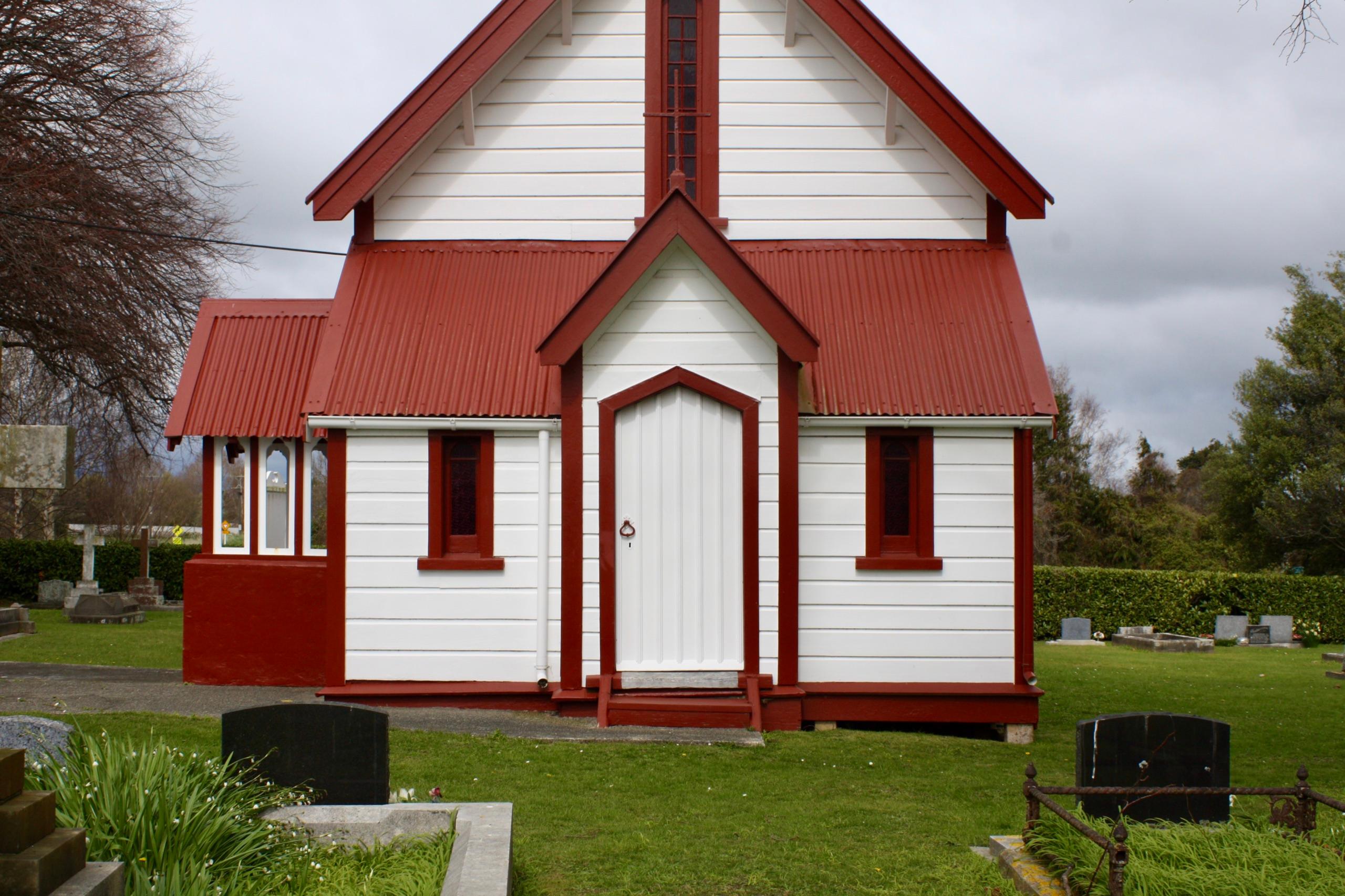
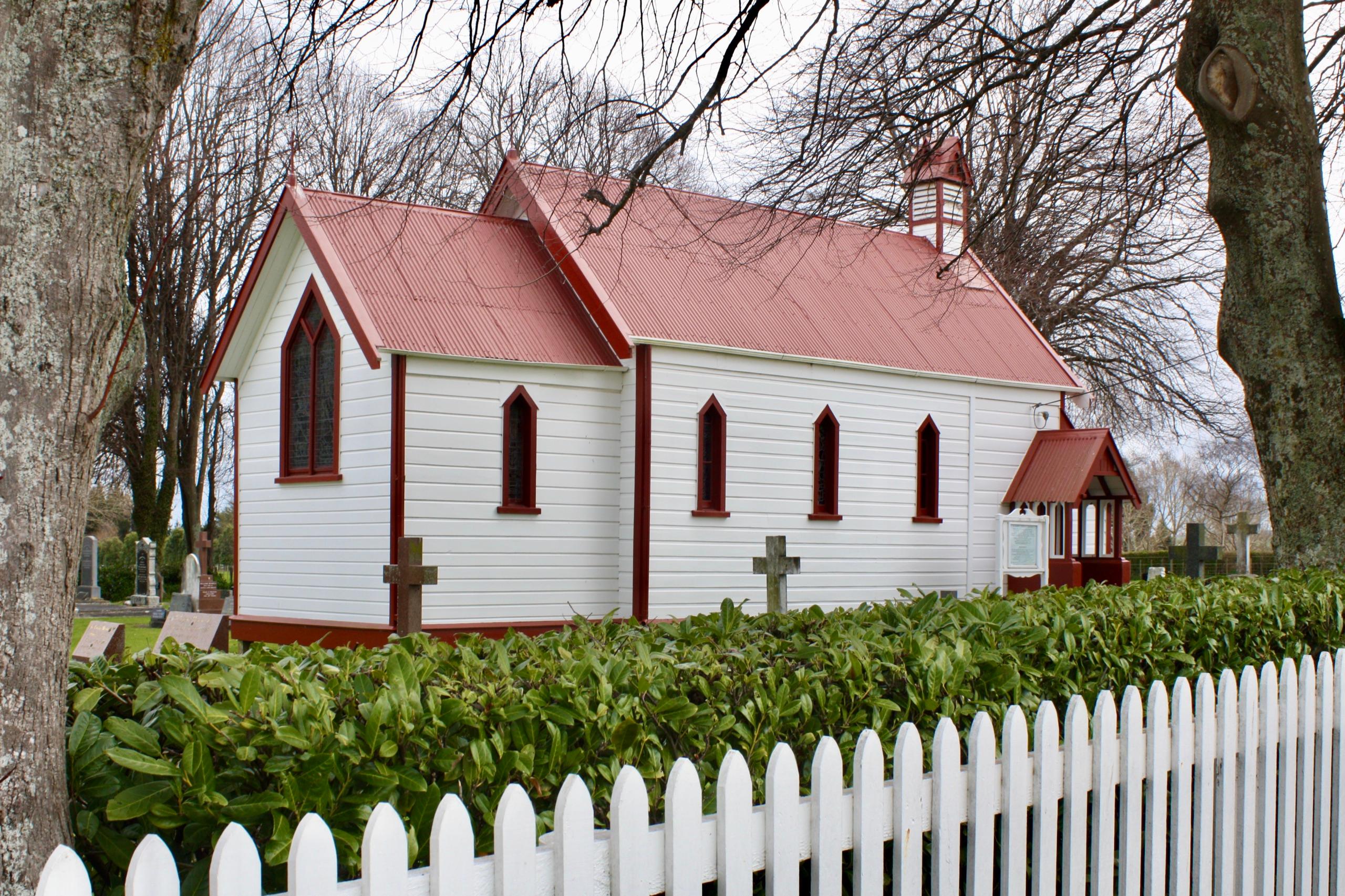
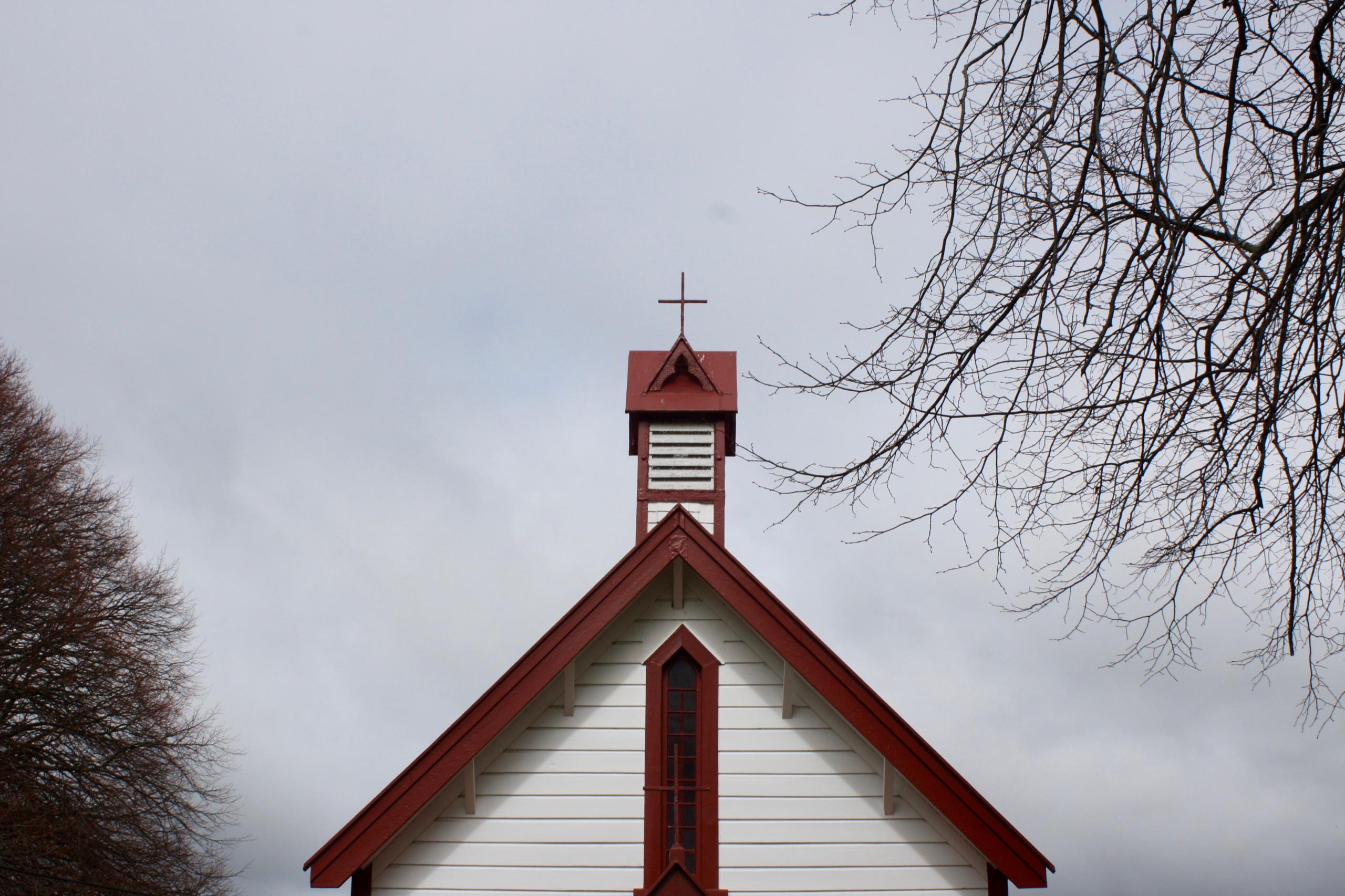
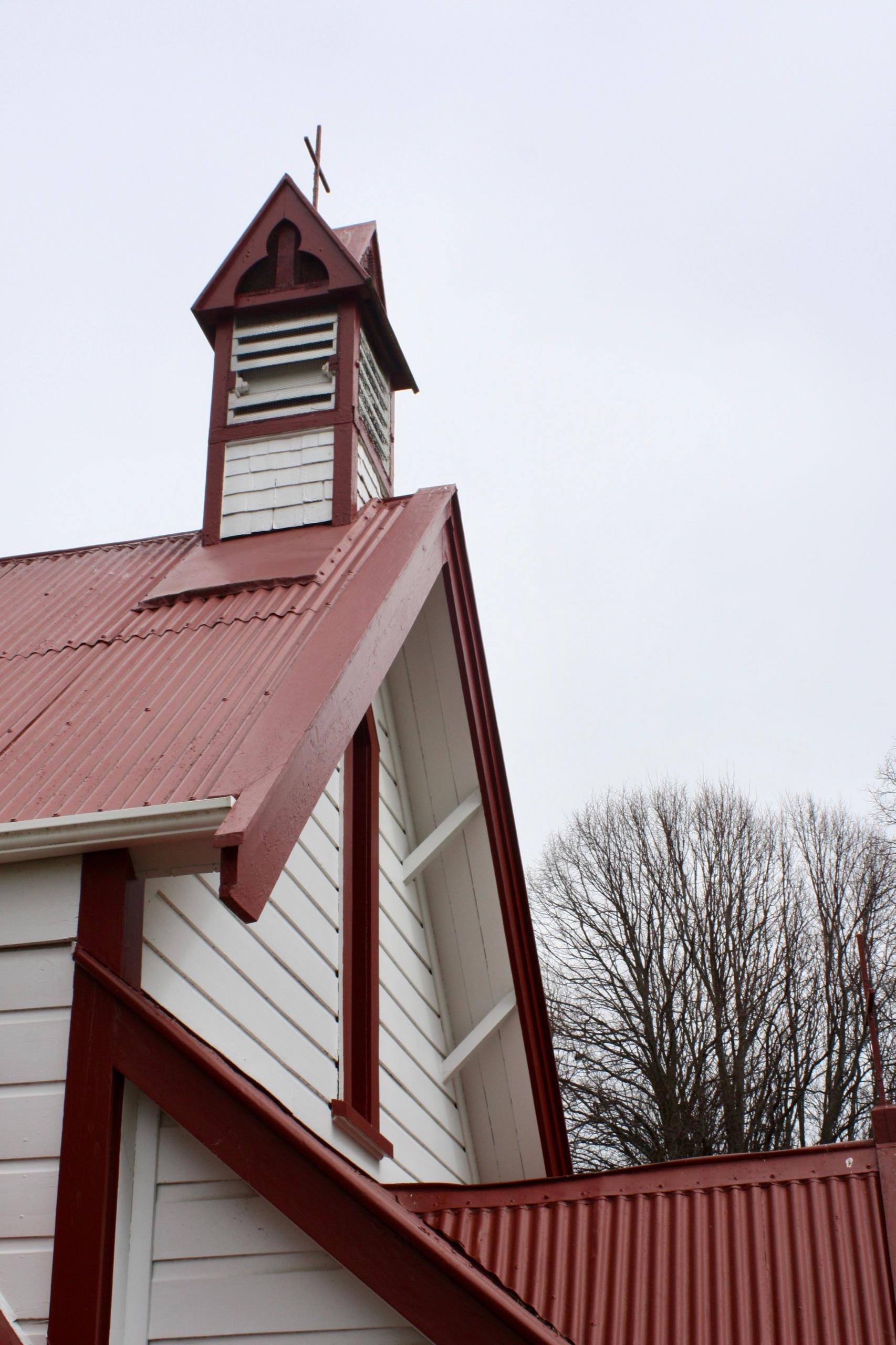
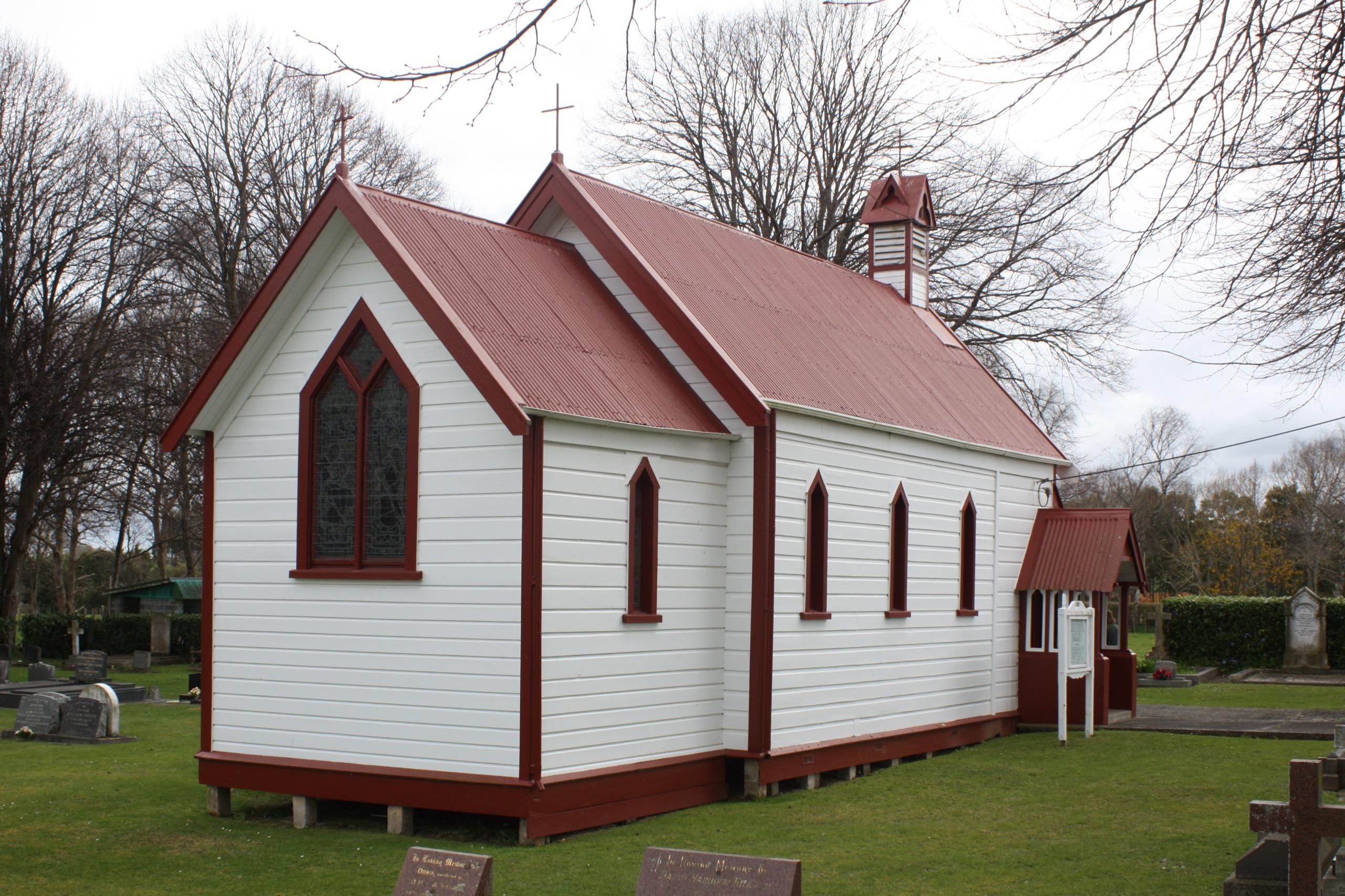
Frederick de Jersey Clere designed it. Born in Rochdale, trained under ecclesiastical architects in Brighton and London, arrived in New Zealand in 1877. By the time the Kiwitea committee accepted his plan he was the Diocesan Architect of the Anglican Church — a post he held for most of his professional life. He designed more than three hundred and seventy buildings; the Manawatū-Rangitikei area contains the greatest concentration of his church work anywhere in the country. St Agnes' was a small commission in a large portfolio, but it carries a footnote in his record: the horizontal weatherboards he used here — on the original building and on the 1896 chancel — were the first time he'd applied that treatment to a church. A rectangular box with a minute vestry beside the west-end porch, a tiny gabled bell-tower perched on the roof, and weatherboards running horizontal. If you know the Clere churches, the silhouette is immediately familiar.
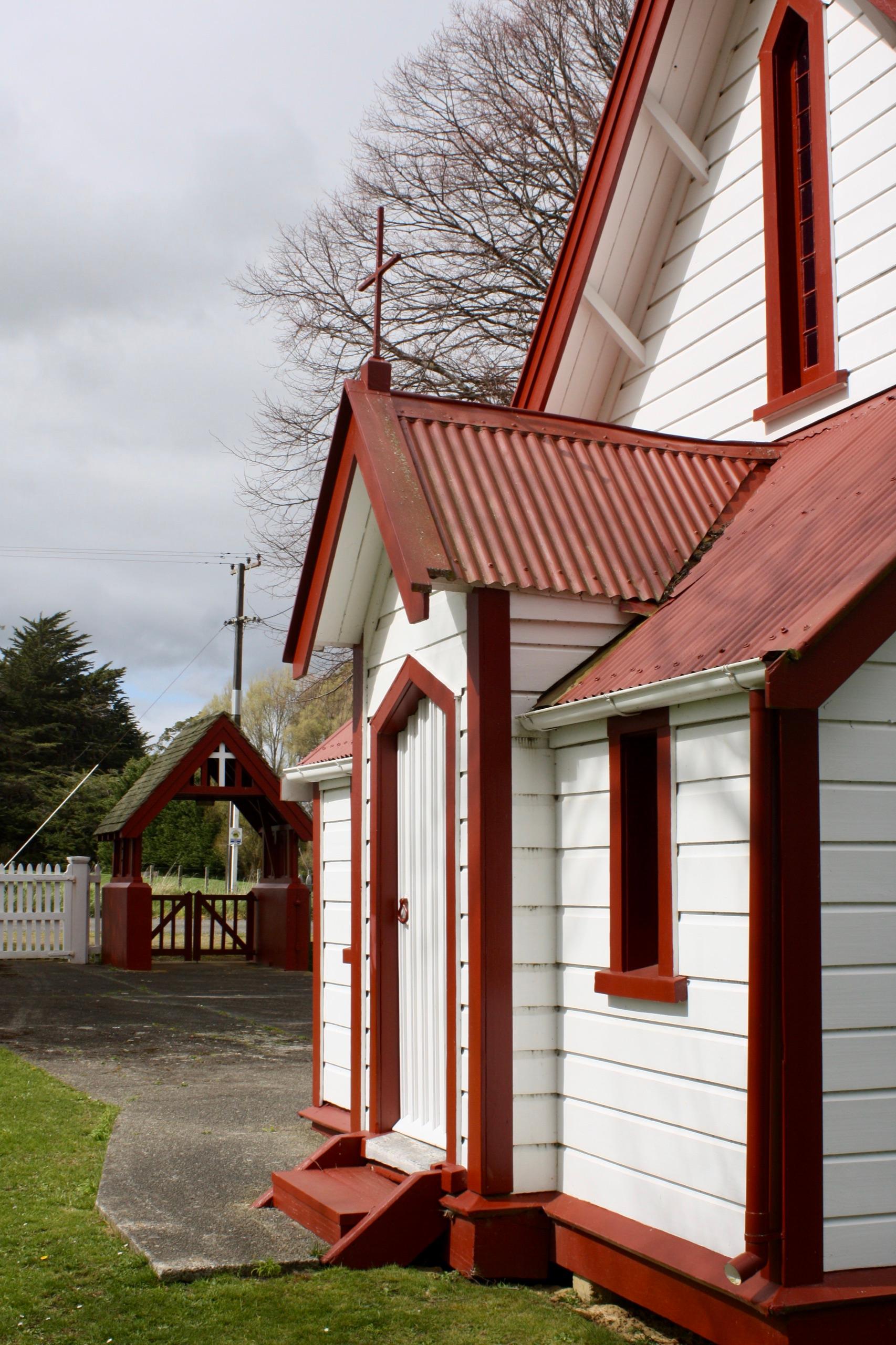
The first service was held on 27 July 1890, a Sunday. Rev. Alan Innes-Jones preached. The interior had been decorated the day before by "several ladies of Kiwitea, with flowers and evergreens" — unnamed, as these things usually were. The walls were lined throughout, the upper lining diagonal in the Carpenter Gothic manner. The seats and fixtures were neatly finished. The church was not yet oiled or painted. Mrs Banks was the organist. Mr W. Johnston was the choirmaster.
Consecration came seven months later, on 25 February 1891. The Primate — Rt. Rev. Octavius Hadfield, Bishop of Wellington — led a procession from the gate, reading the 24th Psalm. The night before, he and Mrs Hadfield had been hosted at 'Ratanui' by the Levetts. It had already been postponed once due to the Primate's sudden illness. The 1940 jubilee article, written from fifty-year-old memory, misremembered the consecrant as "Rt. Rev. F. Wallis." Wallis was not appointed until 1895. The contemporary 1891 account in the Feilding Star names Hadfield clearly, records the offertory (£3 4s 10d for the Church Furnishing Fund), and notes that the bishop and Mrs Hadfield left for Whanganui by express train the following morning. The closer the source to the event, the more you trust it.
The name almost wasn't 'St Agnes.'
The original consecration date had been around St Agnes' Day — 21 January. With the postponement, the committee met again in February and suggested renaming the church St Matthias, the 24th of February being St Matthias' Day. The committee voted for it. Then Helen Rokeby Levett — wife of the site donor, one of the founding women listed by name on the burial ground declaration — expressed a strong wish that the original name remain. The committee agreed.
The smallest intervention that shaped everything. The contemporary FS account of the consecration credits the name to "A.R. Levett, Esq., the donor of the site" — almost certainly a misprint for H.R. (Helen Rokeby). The secondary history records it clearly: Mrs Levett, not her husband. It is a small correction that puts a woman back at the centre of the founding story.
The building grew slowly, as country churches do, in layers of memorial.
The original seating was forty. In 1895 a chancel sub-committee formed — W.F. Jacob, C.A.J. Levett, and W. Gibson — and the chancel was dedicated on 24 November 1896. Forty seats became fifty-six. A metal path was laid from the gate to the church door. The original Kiwitea Hall — where the founding meeting had been held — was moved onto the church grounds in 1902 and repurposed as the Sunday School. "Within the same walls the children should be instructed in the same truths, for which, among other things, their fathers there met together to witness." The founding building absorbed into the institution it had birthed.
In April 1913 the plain glass windows were replaced with tinted cathedral glass throughout. The east-end window — a double lancet with quatrefoil, made by Jones & Willis of England — was dedicated in memory of two women: Helen Rokeby Levett and Henrietta Marie Jacob. Both dead by then; both wives of the founding men. Their husbands donated the window. The women themselves were not there to see it.
Then the war.
Charles Edward Levett was killed in Palestine on 30 March 1918. His family funded a nave extension dedicated on 15 December 1918 — fifty-six seats became seventy-two, a new entrance was cut on the north side, and the vestry was stretched to more than three times its original length. His stepmother carved an oak reredos, donated in 1919. A War Memorial and War Memorial Brass were dedicated in his memory simultaneously.
The Archdeacon's memorial window had gone in two years earlier — Archdeacon Cassell, who died in February 1915. The 1918 influenza epidemic ran alongside the war's final months. The Parish Hall in Feilding was converted to a hospital treating patients from the Kiwitea and Oroua districts. The Cassell window and the Levett nave extension bookend the worst of it in the physical fabric of the building.
The Hocking family lost their son Hugh Dennis in Greece in 1941. The 1947 lych gate — heart totara, tinted concrete base, mellowed red tile roof, designed by Clere & Clere — is their memorial. Three deaths in three years for one family, compressed into the gate you walk through to reach the church.
There are three families whose presence runs through the full length of the record, and each is legible in the building itself.
The Jacobs were there from the beginning. W.F. Jacob's founding subscription was £10. He served as parochial treasurer and synodsman for decades. His farm was 'Te Marama.' His wife Henrietta is in the east window. His son W.H. — a lay reader and vestryman — died before January 1928; his widow donated a memorial window overlooking the pew where he had regularly sat. In December 1929 the Bishop of Wellington presented W.F. Jacob with an illuminated address on his retirement from church office; the former vicar Mayo spoke of Jacob's "sterling qualities, not only as a church officer, but also as a man and friend of all." When Jacob died in Auckland in May 1937, his estate was sworn under £70,000. His bequests included £300 specifically ringfenced for the rebuilding or restoration of St Agnes', along with £1,000 to Wellington Cathedral and £1,000 to the Anglican Board of Missions for Melanesia. A third Jacob window was dedicated in October 1941. At his funeral Rev. Fleury called him "the grand old man of Kiwitea."
The arc: £10 at a founding meeting when the farm was new and the money was not easy; forty-eight years of service; a £300 bequest for a church that had outlasted most of its founding generation. The small founding subscription and the enormous estate at death are not a contradiction. The loyalty came first. The money followed later.
The Levetts: C.A.J. Levett donated the acre, served as Vicar's Churchwarden continuously from 1895, and was the only surviving original committee member at the 1940 Golden Jubilee. He died in 1942. His widow donated a marble plaque; the north porch was erected in his memory in 1949. Helen Rokeby Levett — who named the church — died sometime between 1891 and 1913; the exact date hasn't surfaced. Her name is in the east window, at least, which is more than most women in this record got.
The Tappins: William Tappin served as people's churchwarden from the building of the church until his death in May 1925 — thirty-six years without a break. His daughter married at St Agnes' in 1900. His son Frank was a lay reader and committee member at the 1940 jubilee; Frank's daughter Evelyn married at St Agnes' in 1942. Three generations in the record. William Tappin served this church longer than any of its clergy.
The clergy are worth their own accounting.
Kiwitea was a lay-led congregation for most of its early Sundays. Rev. Hermon and then Rev. Innes-Jones served Feilding and its outlying churches on rotation — St Agnes' received a Lay Reader perhaps two Sundays in three. Even at Easter, the town churches got priority. Christmas 1892: a 3 p.m. service at St Agnes', no minister named. A Lay Reader Christmas. Holy Communion rotated across the circuit and arrived infrequently. This was the norm, not the exception.
Innes-Jones preached the first service and served the Feilding circuit for twenty-seven years (1893–c.1920). He was still present in robes at Archdeacon Cassell's funeral in 1915, twenty-five years after that first Sunday. When he retired he exchanged charges with Archdeacon Petrie of Wellington; his wife died shortly after the move. He died at Blenheim in April 1940.
Rev. G.P. Davys was appointed assistant curate in September 1896. Three years later, at the end of 1899, he was farewelled by the Ongo, Apiti and Kiwitea communities. One hundred and seventy-two people signed an illuminated address. A woman named Mrs Hodge created it: a watercolour of St Saviour's Kimbolton, and all 172 signatures copied by hand. A gold watch chain and cross pendant were presented. "A resume of the Rev Davys' work in this district was given by Mr Jacob." That's the full record on Davys — three years of ministry, 172 people who wanted to mark it, and no further trace.
James Robert Cassell came to New Zealand in 1899 or 1900 as assistant curate to Innes-Jones. He had read at Oxford — BA Senior Optime — and been ordained at Reading in 1893. In May 1901 he became the first vicar of Kiwitea when the parochial district was formally separated from Feilding. Seven years in the district, then Hawera, then Archdeacon of Waitotara in 1912. He returned to Kiwitea in April 1913 to dedicate the dual memorial windows for Helen Levett and Henrietta Jacob. In early 1915 he had a serious nervous breakdown. He died on 8 February 1915, aged forty-six.
He chose to be buried at Kiwitea.
Laid to rest close by the chancel of St. Agnes' Church, where so often he preached and administered the Holy Communion in years gone by.
An Oxford graduate, a former archdeacon, a man who had served in England, Hawera, and Waitotara — buried in a paddock in the Manawatū because that was where he wanted to be. More than fifty wreaths. A choir of ladies from Kiwitea and Kimbolton. The Nunc Dimittis recited by all. He had known the church for fifteen years. It had outlasted everything else.
Rev. John Frederick Mayo served as the second vicar from about 1907 until he resigned in October 1928 "owing to medical reasons." More than twenty years in the district. He is the only clergyman with a published book — a history of the Feilding parish — and the only one with a memorial window dedicated in the year of his death (1956, the year his book also appeared). He married his brother-in-law Robert Burrell to Sybil Conway at the church in 1926, the pastoral and the personal inseparable in a small district. He attended Mrs Rutherford's funeral in 1937, nine years after leaving, travelling from Marton. He never quite left.
About that acre.
C.A.J. Levett bought his section under the Land Act 1877, through the Special Settlement scheme — a ballot system for deferred purchase of Crown land. The Kiwitea Block had been surveyed for Crown sale in 1876: 24,000 acres. Before 1876 it was part of the larger Rangitāne estate.
The 1864 Te Ahuaturanga purchase by the Crown: approximately 250,000 acres; £12,000 paid; Rangitāne reserves reduced from 5,000 acres to 2,570. The 1866 Rangitikei-Manawatū purchase: approximately 241,000 acres; £25,000 paid; of which Rangitāne received only £600. In 2016 the Crown's Treaty Settlement with Rangitāne o Manawatū acknowledged those purchases as seriously flawed. By 1930, Rangitāne landholdings had shrunk to 2,903 acres.
The north porch — built in 1949, memorial to C.A.J. Levett — sits on land that traces directly to those transactions. The founding settler, and the church, and the district: purchased from a Crown that had paid £600 for a quarter-million acres. I'm writing from inside a tradition that was a direct beneficiary of it.
I'm not going to resolve that. It's real and ongoing and it doesn't simplify. What I can say is that the church's record — the newspapers, the subscription lists, the wedding notices, the funeral accounts — is almost entirely the record of Pākehā settlers. Rangitāne are present in the land itself, in the legal history of the title. They are not visible in the newspaper archive that documents this church's life. That absence is part of the record too.
The women in this record deserve more than they got from the newspapers.
"Several ladies of Kiwitea" decorated the church the day before the first service, with flowers and evergreens. They are not named. Mrs Hodge copied 172 signatures onto an illuminated address for a departing curate and painted a watercolour of St Saviour's Kimbolton. She is named once. An unnamed woman — C.E. Levett's stepmother, probably trained in woodcarving at Feilding Technical School — carved the reredos that still stands behind the altar, dedicated 1919. Nobody thought to record her name. Mrs C.L. Williams played the organ at funerals and significant occasions across five years, 1937–1942, named in passing. Miss Taylor served as organist for eighteen years.
At a Beaconsfield meeting in April 1937, Rev. Fleury asked Mrs Dickerson "to accept a brass vase as a small token of the congregation's appreciation of her self-appointed work in the church grounds." "Mrs Dickerson suitably responded." That is the full account of what was clearly a long and unremarked labour. She had been tending the grounds of her own accord, without acknowledgement, until someone thought to name it once.
Helen Rokeby Levett saved the name of this church with a single expression of preference. The FS account of the consecration misprinted her initial as A.R. instead of H.R. The secondary history misspelled her surname as "Lovett." She died sometime between 1891 and 1913; the exact date hasn't surfaced. Her name is in the east window, which is more than Mrs Hodge got. But if you read the newspaper record without checking the corrections, you miss her almost entirely.
There's a thread of weddings worth following, because it says something about who was here and how long they stayed.
The first was on 5 January 1893. Glorvina Diana Moore married Albert Bennett of Manaia. "Miss Moore being the first bride married in the church." Long before the fixed hour of 2 p.m., traps and vehicles were making their way to St Agnes'. Hymn as the bride entered: "The voice that breathed o'er Eden." Little girls in white frocks scattered flowers in the pathway. Among the guests were Mrs Clere — the architect's wife — as well as the Levetts and the Jacobs. That evening, the bride's father Major Moore hosted a dance at 'Moorfield.' Major Moore was "late of 20th Hussars, Indian Army." He is buried in the Kiwitea churchyard. His grandson Hugh Frederick Moore is buried alongside him — killed in a farming accident in 1928, aged twenty, the pall-bearers all from the Manawatu Hunt Club. The empire, compressed into a few headstones in a paddock.
Sybil Conway married Robert Burrell at the church in October 1926. Her sister Flora was a bridesmaid. The Bishop of Wellington officiated; Rev. Mayo assisted as the groom's brother-in-law. In 1938 Sybil's younger sister Prudence married at the same church. "The veil, a family heirloom, was caught to the head with a coronet of lily of the valley." Robert Burrell appeared as an usher — the same man who had married Sybil here twelve years earlier. In January 1941 Flora Conway — the bridesmaid — married Thomas Hastings York at St Agnes', on New Year's Day. Flora's mother was deceased. Thomas's father was deceased. Two families carrying loss, arriving at a country church at the start of a year that would not be easy. Thomas had come from Billericay, Essex, from a property called "Lawness." Both his parents were gone.
The church as a place people arrived at from a long way away, and sometimes stayed.
A few things I'm still working out.
Captain W.R.E. Dalrymple — who died suddenly on 7 December 1890, aged thirty-six — was one of the two men who chose the name 'St Agnes.' He was an invalid friend living at 'Ratanui.' The church was not yet consecrated when he was buried in its churchyard; he became the first burial there before the building was formally given to God. I don't know more about him. He named a church and died before its consecration and was laid in the ground it would stand on.
There are 1886 articles in the Feilding Star — pre-founding, pre-meeting — that I haven't been able to access yet. They might push the Kiwitea settler record back further. There are also two April 1908 issues I'd like to find, bracketing the departure of W.D.M. Banks for Christchurch. Banks had been the Hon. Secretary of the original Kiwitea Church of England Committee in 1889, wrote the thank-you letter after the founding concert, whose wife had been the first organist. Nineteen years from the concert to the morning express south. I'd like to know what the paper said.
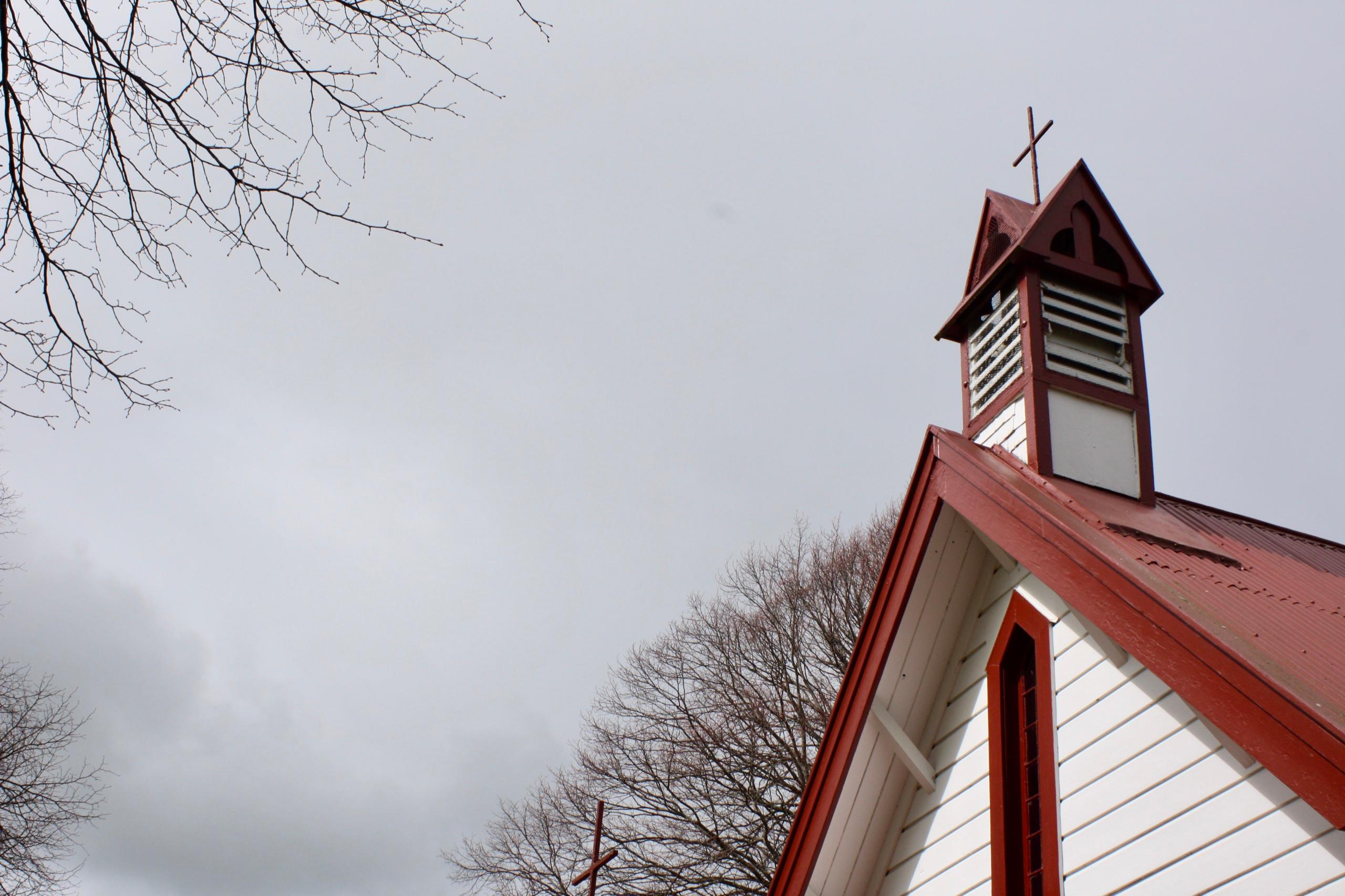
In 1946 Barbara Alice Warburton donated the first bell, in memory of her husband Edward Darian Warburton. The bell tower had been there since 1890. For fifty-six years it had stood above the roofline with nothing to ring — a shape promising a sound that hadn't arrived yet.
Then one person gave it weight.
St Agnes' Anglican Church, Kiwitea, Manawatū. Consecrated 25 February 1891. Heritage Category B. The Manawatū District Council describes it as one of New Zealand's finest surviving examples of the Carpenter Gothic rural Anglican church.